The EFCA Leader's Network
The Ministerial Association of the Evangelical Free Church of America
Family Ministry: an Overview and Proposal

In response to increasing numbers of kids who grow up in church but walk away from their faith as young adults, many churches have begun to rethink how ministry to children and youth is done. This began in the mid ‘90s with just a couple of church leaders pioneering different approaches to family ministry. Mark DeVries, in Family-Based Youth Ministry (1994), did not advocate dramatic structural changes, but called for a shift toward supporting the family and involving parents more intentionally in the discipleship of students.
At about the same time, Reggie Joiner (on staff with Andy Stanley in Atlanta) took more radical programmatic steps to bring parents and kids together. Interestingly, his quest was prompted by the film The Lion King. As they drove home, the whole family was engaged in a significant discussion about the essence of family, personal identity and sacrificing for others (remember Simba and Mufasah?). Reggie began to wonder why they weren’t driving home from church having the same kinds of discussions, and concluded that the reason was that every family member was having a different experience each Sunday! It was the shared experience of the movie that brought them together and gave them a platform for meaningful dialogue. Why couldn’t the church provide a high quality shared experience that would bring parents and kids together on a regular basis? And so, KidStuf was born – a weekly 45 minute production for the whole family. Today, thousands of churches around the world use 252Basics curriculum and run a KidStuf-style program.
What started at isolated churches, like pebbles tumbling downhill, began to impact other churches and soon after the start of the new millennium an identifiable family ministry movement was underway. Supported by research from Barna, Lifeway and others like Ken Ham of the Creation Museum (Already Gone, 2009), old methods of age-segregated programming were called into question. I still remember Barna’s chilling observation after more than 20 years watching the American church: “We are not even reaching our children!” The facts are these: roughly 60% of 60 year olds attend church, and 50% of 50 year olds and so on down to only 20% of 20 year olds regularly attend any church! Today’s young adults are far less interested in “doing church” than the generations preceding them. This data does not mean that church-based, age-segregated programs have been the cause of the problem. But it does mean that 40+ years of church-based programs have contributed to an epidemic of parental failure to effectively train children to be “spiritual champions” (to use the term from Barna’s ’03 book).
God’s Way: Parents as the primary disciple-makers of their children
God has always placed the responsibility for spiritual training squarely on the shoulders of parents (Deut. 6:4-9), so the majority of the blame for kids abandoning the spiritual heritage of their family must fall on parents. But the church has enabled this parental disengagement by regularly communicating that the primary duty of parents is just to “get the kids to church!” The time has long since come for the church to reverse this pattern of tacitly encouraging parental negligence and to sound the trumpet call for parental responsibility!

The Bible is crystal clear about how the faith is to be passed on from one generation to the next: through parents. First, the word of God and the love of God must be “upon the hearts” of the parents (Deut. 6:6). Training children cannot succeed unless parents model the vibrant, joyful faith they want their children to develop. Second, parents must impress the truth of God’s word on their children – they must “engrave” His law on their hearts and lives. This should happen both formally, through planned Bible studies, and informally, through the day-to-day interactions of life (Deut. 6:7-9). It is significant to note that in the Biblical context, the primary responsibility for training children fell upon fathers (Eph. 6:4). Yet many Christian families today are led by mothers, since so many fathers have failed to take leadership in their homes, or are not led at all.
3 Models of Family Ministry
To implement this principle of empowering parents, three models of family ministry have emerged. On one extreme are Family-Integrated churches that have eliminated all age-segregated programs and keep families together virtually all of the time, focusing on equipping parents (especially fathers) to train their children at home. On the other side is what DeVries calls Family-Based churches that have continued most of their age-organized ministries but have built the philosophy of supporting families and engaging parents in everything the church does. Seeking to balance these two approaches are what Dr. Timothy Paul Jones (Southern Seminary) has called Family-Equipping churches that keep some age-based programs but structure the overall ministry around training and supporting parents as the primary disciple-makers of their children.
As this graphic shows, there is some overlap between these models of ministry, but the extremes of an age-segregated, progammatic church and a fully integrated church are dramatically different. Most churches today are shifting from a program-based philosophy to at least a Family-Based or “Family-Friendly” approach. But many are going even further to communicate to parents, both verbally and structurally, that raising kids to know and love Jesus is the job of mom and dad – with the church moving into a support role.

An Epidemic of Parental Disengagement
This is a major paradigm shift for those of us who grew up with age-segregated structures like AWANA clubs, youth group, Bible camps and conferences. Research supports the hunch of many pastors today that, “most parents are perfectly content to sit back and allow the church to assume the role of primary spiritual caregiver in their children’s lives” (Perspectives p. 129). The Barna Research Group concluded in 2003 that 85% of Christian parents recognized that they are responsible for their children’s spiritual development – but “the vast majority were not personally engaged in any activities that might guide their children to spiritual maturity” (“Parents Accept Responsibility,” ch. 2 n. 6). “In a typical week, fewer than 10 percent of parents who regularly attend church with their kids read the Bible together, pray together (other than at meal times) or participate in an act of service as a family” (Transforming Children into Spiritual Champions, p. 78). When the church seems to be doing such a good job – with fun activities, stage-production teaching, and full-color-glossy Bible class worksheets – parents often mistakenly conclude that the work is being done. This is how most of us handle education and training for sports and other hobbies – leaving the teaching and coaching to trained specialists – why shouldn’t we simply find the best spiritual trainers and bring our kids to them?

The answer is that God has already made it very clear that professionals in the church are not primarily responsible for the spiritual training of children – parents are. Family Pastor Brian Haynes wrote about how, over the last 50 years, the church moved away from the historic parent-driven approach: “The church growth movement redefined success… from an emphasis on spiritual formation to an emphasis on numeric growth… We developed children’s ministries and youth ministries and gave hired professionals the responsibility for mentoring too many children. In short, we did it our way” (Shift – What it takes to finally reach families today, p. 37). The results of raising children “our way” instead of God’s way are now unmistakable – you can’t ignore them any more than you can ignore a burst pipe over your living room. Kids who grew up going to church, a solid majority of them, will quit church altogether by their second year of college.
Laying the Foundation Early
Youth ministry has been compared to a river rescue mission, pulling students out of a fast-flowing, dangerous current. The shift to family ministry is a move upstream to keep the teens from falling into the river in the first place by strengthening the family and equipping parents while the kids are still young. Barna’s book, Transforming Children into Spiritual Champions (2003), revealed that, “the moral foundations of children are generally determined by… age nine” (p. 47), and that a child’s core beliefs and spiritual identity are largely in place by age 13 (pp. 34, 37). Parents can mistakenly assume that preschool age children are not learning significant spiritual lessons, but the truth is that the first five years lay the foundation for what a person is likely to believe about God, family, the church and what is important for the rest of his or her life (p. 58)!
The chart below portrays the practical reality of parenting that as kids get older they become increasingly independent. When children are young, parental involvement and influence are total. Through the teen years and into young adulthood, the role of parents changes from one of direct control to more of a coaching relationship and then into a trusted friendship. It is very natural for parents to give their kids more and more freedom as the maturing young people show more and more responsibility in their decision making.
Parents can stray from this healthy movement in either of two ways. Some give young children too much freedom, too soon, causing insecurity and confusion. Other parents hang on to their authority too long, causing resentment and rebellion. Parenting never follows a smooth and predictable course, but this general pattern of raising wise, responsible, independent young men and women should certainly provide a guiding line for parents to follow. Through this 18-20 year process, recognizing the reality of the temptations and pressures in the world today, the church must come alongside parents to support and equip them to effectively raise God-loving, Christ-following, Spirit-filled children.
A Strategic Approach to Family Ministry
In the early years, the Family Ministry should focus on encouraging and exhorting parents to model a healthy marriage, passionate faith and godly values. Young children are always picking up on the things that are truly important, not only in what we say, but especially in what we do. A comprehensive plan for Christian Education can provide helpful guidance, resources and mile markers to assist parents in shaping a Biblical worldview and positive habits of spiritual living. Then, through the teen years, the church can provide additional leaders as “Assistant Coaches” (the parents are the Head Coaches) to further build up and mobilize students as sold-out followers of Jesus. The greatest support any church can provide for families is the ministry of prayer – pleading with God on behalf of parents, kids and teens for His protection, blessing, wisdom and grace.
3 Commitments of a Parent-Equipping Church
In order to effectively equip parents to succeed in raising godly children, there are three commitments the church must make: to provide consistent communication, practical training and an intentional process of disciplemaking. First, the church must consistently communicate – both in words and in the structure of ministry – that parents are the primary disciple-makers of their kids. This message must come through loud and clear in the preaching and teaching ministry, the communication vehicles of the church and in the calendar of events. If any of those things sends no message, or a conflicting message, parents will continue on what has become the default path of letting the church make the disciples. This is why I believe some structural changes are helpful and necessary in leading families through this paradigm shift. If the church continues to provide all the same programs for reaching and training kids and teenagers then we are, in essence, saying that it is our job and the parents’ role is just to bring the kids to us.
Second, the church must train and equip parents to be effective disciple-makers. “Parents are not so much unwilling to provide more substantive training to their children as they are ill-equipped to do such work” (Barna, “Parents Accept Responsibility,” quoted in Perspectives p. 25). No successful army sends untrained, ill-equipped soldiers onto the battlefield. But in many ways that is precisely what we have done in the church by saying, “parents, this is your job!” without providing regular, practical training and support. Parents need training, encouragement and resources on how to do family devotions and discipleship. And they need to see leadership level families modeling and talking about the priority of a weekly “family Bible time,” or “faith talk.”
Finally, the church must provide an intentional discipleship pathway that parents can follow with their children. Many churches fail to present a clear discipleship pathway for adults, so the process of maturing in Christ can be even foggier when it comes to children and youth. This is why some churches are now using Milestones to provide growth markers for parents and kids to measure progress and celebrate the work God is doing. These Milestones include salvation, worldview formation, coming of age and graduation. The church provides focused training and resources to help parents move their children to the next growth marker on the pathway.
A 7 Milestone Pathway to Parent-Driven Disciplemaking
These milestones were adapted from Brian Haynes’ Shift – What it takes to finally reach families today (2009).
Milestone 1 – Dedication
Even before a baby is born the church can begin its ministry of equipping parents by offering a class on child dedication. The purpose of this class is to teach parents the key principle that they are the primary disciple-makers for their child. The ceremony of dedication is both a public recognition of this Biblical truth and an opportunity to remind all parents and the whole church of this fundamental concept. At this first milestone the partnership between church and family is formally acknowledged as parents are commissioned to take responsibility for shaping the faith of their child and the church is challenged to support the parents in this all important task.
¬ Parents’ Responsibility: publicly commit to raising their child(ren) to love and follow Christ, reading a prayer of blessing for the child(ren)
o Resources: The Five Love Languages of Children, Chapman & Campbell; The Power of a Praying Parent, Stormie Omartian
¬ Church’s Role: celebrate the parents’ dedication and commit to prayerfully support them
o Parent Seminar: Child Dedication Class
o Church Event: Child Dedication Ceremony
Milestone 2 – Salvation (age 2-8)
The foundations for what a person will believe and how she will live are laid in the first few years of life. In many ways the most strategic investment a church can make is in equipping parents to be intentional faith-shapers during the preschool and early elementary years. This does not mean parents should seek to manipulate children into making a profession of faith. But it does mean that parents should actively model faith-filled prayer, the habit of Bible study and reading as a family, faithful church attendance and service to others. Much more is caught than taught in the early years, but as language develops parents can begin to use picture Bibles, books, music and fun activities to begin teaching core doctrines about God, Jesus, the Bible and salvation – in simple words, of course.
Building on these early positive impressions, parents will have many opportunities to explain to their children what it means to trust in Jesus, asking him to wash away their sins and become their leader. Supported by Sunday School teachers and church programs that emphasize the gospel, parents should be able to guide their children to a faith commitment. This momentous milestone should then be celebrated, both as a family and as a church. If the child is old enough and the family desires to pursue baptism, that can be a memorable event in the child’s life and a powerful encouragement to the church. If the child is younger, the parents may choose to celebrate through a family banquet, a spiritual birthday party or some other joy-filled event, possibly along with other families in a church setting.
¬ Parents’ Responsibility: lay the spiritual foundation of love for God, trust in Jesus and obedience to God’s Word, leading to salvation in Christ
o Resources: Shepherding a Child’s Heart, Ted Tripp; Leading your child to Jesus, Michael Staal; The New Dare to Discipline, James Dobson
¬ Church’s Role: provide resources and programs to support these foundations and celebrate faith commitments (in baptism for older kids and teens)
o Parent Seminar: Laying Foundations of Faith
o Church Event: Gospel-centered Family Night (The Most Important Class of the Year); Celebration of Salvation
Milestone 3 –Formation (age 8-12)
With a solid foundation in place – a positive view of God, a reverence for His Word, a heart for Jesus and a commitment to the church – parents can help their children build a strong, Biblical worldview through the elementary years. Continuing the habits of daily devotions and weekly “family Bible times,” parents can both formally and informally teach their kids Biblical doctrines (salvation, the Trinity, the Bible, Jesus, the Holy Spirit, people, etc.) and spiritual habits (prayer, Bible study, worship, service, etc.). Through regular parent-child interaction kids will answer the critical questions: who am I? and whose am I? What better gift can parents give their children than a Christ-centered identity at an early age?
To celebrate the completion of this milestone, the church can provide a spring retreat for 4th-5th graders and their parents. This weekend away combines fun activities and memory-makers with more intentional teaching to reinforce what parents have been teaching for the last several years. Many families may also choose to do a family celebration, like a father-son camping trip or a mother-daughter overnight, to provide a setting for discussion of the physical changes and other realities their child will soon face as he enters middle school.
¬ Parents’ Responsibility: model and teach a Biblical worldview related to God, sin, salvation, Jesus, the Bible, the church and missions, fostering spiritual disciplines and the establishment of Christian identity
o Resources: Newlifediscipleship.com (13 lessons in basic discipleship, free downloads); Preparing for Adolescence, James Dobson; Revolutionary Parenting, George Barna
o Family Celebration: Weekend Getaway – Father/Son, Mother/Daughter fun trip to discuss worldview, identity and coming changes and challenges (suggested gift: compass / necklace – symbol of identity in Christ)
¬ Church’s Role: provide resources and programs to support this worldview development
o Parent Seminar: Building a Biblical Worldview
o Church Event: 4th-5th grade parent-child retreat
Milestone 4 – Holiness (6th-8th grade)
It may be an elephant nobody wants to talk about, but it is definitely in the room whenever middle school students are present: sex. Well meaning parents may be able to insulate their young teens for a while, but at some point they have to prepare their kids for the realities of the world we live in. “Isolationism, though appealing, isn’t the answer. Instead of protecting our children from the outside in, we need to strengthen them from the inside out” (Shift, p. 68). The habit of weekly Bible Time as a family, along with an open parent-child relationship, should provide many platforms to discuss how bodies change in adolescence and how to honor God through a commitment to holiness. This milestone is clearly broader than sexuality, but it must include deliberate study and discussion of God’s view of sex (Gen. 1:28; 2:24-25) and the blessed protection of purity (e.g. Eph. 4:17-5:21).
Through late elementary school and middle school parents can engage not only Biblical holiness and sex, but also healthy friendships, communication, and one-another ministry and outreach. Holiness is about being fully set apart for God’s use, so movement toward this milestone should include discussions, programs and events that challenge young teens to take ownership of their faith and yield their hearts and bodies to God (Rom. 12:1-2). As students make such commitments, baptism can serve as a powerful symbol of dying to self and rising to life in Christ (Rom. 6:1-6). During these transitional years students begin to experience greater independence from mom and dad, elevating the church’s role in providing godly mentors who can facilitate supplemental Bible studies and build mentoring relationships. The church-family partnership may also result in special events like Bible conferences and missions trips that further challenge students to take hold of their faith and live fully for God.
¬ Parents’ Responsibility: intentionally and consistently teach and dialogue about Biblical holiness including God’s view of relationships, marriage, love and sex, leading to a commitment to purity.
o Resources: Learning about Sex Series, Concordia Publishing (a 7 book progressive series starting with 3-5 year old children); Age of Opportunity, Paul Tripp; The Bible Instruction Course (EFCA)
o Family Celebration: in response to the child’s commitment (and possibly baptism), host a party and give a symbolic gift (e.g. a purity ring)
¬ Church’s Role: provide resources and programs to support this commitment to holiness
o Parent Seminar: Modeling and Teaching Biblical Holiness
o Church Event: 7th-8th grade parent-child retreat, encouraging a commitment to purity that is celebrated publicly in a worship service
Milestone 5 – Maturity (9th-10th grade)
The teen years are often treated as a responsibility-free intermission for kids to “discover themselves,” and just have fun (Perspectives pp. 27-30). In our increasingly secular culture, this introduces a dangerous array of temptations for teens without solid Biblical moorings. Parents must refuse to passively step back from their teens and allow other influences to take center stage. “Schools, media, and peers are the ‘disciplers’ of America’s children – discipling them in secular humanism and vague, self-centered spirituality” (Perspectives p. 67). A 2005 study revealed that the belief system of a large majority of American teens (including those raised in the church) can be described as moral therapeutic deism: “religion is all about doing better and becoming happier” (Christian Smith, quoted in Perspectives p. 141).
It is this context that parents must get back into the driver’s seat (still recognizing their teens are on a journey to independence) and maintain an active, disciplemaking role as long as their kids are in the house. As beneficial as youth pastors and other adult mentors are through middle school and high school, they should serve as a supplement for, not a replacement of, parental engagement in Biblical training. In many ways training should intensify during the later teen years as kids show more wisdom and can take on more responsibility. The church should actively empower students who show a heart for the Lord and for ministry and provide opportunities to serve and utilize their gifts to build up the church. Youth can often lead the way for the church in evangelism by reaching out to their lost friends, helping to win whole families to Christ. Local service projects and overseas missions trips can include mature teens, with the guidance and involvement of their parents (unless those parents are absent or disengaged spiritually themselves).
The passage to adulthood should flow naturally from the four preceding milestones. A teenager with a foundational love for God and commitment to Christ who has built a Biblical worldview and made a commitment to holiness has already taken most of the steps necessary to become a godly man or woman. (Think of how many adults you know that have not taken all of these steps and yet are often viewed as godly leaders.) All that remains is for parents to teach their maturing teens about Biblical manhood and womanhood and guide them into discovering their spiritual gifts and meaningful service. Instead of allowing teenagers to drift through their teen years, parents should challenge them to take responsibility as committed followers of Christ to live every day for him and him alone!
¬ Parents’ responsibility: model and teach Biblical manhood and womanhood, encouraging their teens to step up as responsible, faithful young adults
o Resources: Spiritual Milestones, Weidmann, Ledbetter; Raising a Modern-Day Knight, Robert Lewis; Shift – What it takes to finally reach families today, Brian Haynes
o Family Celebration: Rite of Passage – a gathering of significant adults in the life of the teen to speak truth, encouragement hope into his or her life. Parents provide a gift symbolic of their prayers and dreams for the young man or woman (e.g. sword, necklace, Study Bible).
¬ Church’s role: provide resources and encouragement for parents to facilitate this passage to adulthood.
o Parent Forum: a discussion of how to motivate teens to take responsibility and move into Biblical manhood and womanhood.
Milestone 6 – Graduation (11th-12th grade)
As students finish high school and prepare for their next steps, “parents need to stay connected relationally and continue to lead their children spiritually” (Shift p. 94). They need to actively prepare their kids to defend their faith, answer objections, develop life skills like money management and continue the discussion on dating and marriage. Teens should have at least one or two “Assistant Coaches” at the church who are also speaking truth into their lives, offering encouragement and support. This additional scaffolding should help support the students as they transition into college and young adulthood. But parents remain the primary architects and truth-builders in the lives of their teens. What has been modeled and taught in the home has, without a doubt, been caught through the preceding 17 or 18 years. This is the time to take advantage of the few remaining moments that the kids are at home.
¬ Parents’ Responsibility: teach and discuss critical life skills like apologetics, love and marriage, money management and vocational calling; prepare a written blessing expressing their prayer for their child
o Resources: Mere Christianity, C.S. Lewis; Letters from Dad, Greg Vaughn; The Reason for God, Tim Keller
¬ Church’s Role: encourage parents to remain engaged and support them in equipping their teens for life
o Parent Seminar: Preparing my Teen for Life
o Church Event: Senior Send-off – formal dinner for seniors and parents to celebrate God’s work in the students’ lives
Milestone 7 – Life in Christ (everyone)
This milestone applies to all believers and thus serves as a catch-all for those who enter the Milestone process part way. The church’s teaching and equipping environments such as worship services, small groups and adult classes all support growth toward this milestone. True, we will not fully experience life in Christ until we die or he returns, but we should still make it our goal to seek him with all our heart, soul, mind and strength! This milestone, then, represents the church’s adult discipleship pathway – how everyone is expected to continually grow in their faith and obedience to Christ. When students graduate from high school they should be well trained and prepared to love and follow Jesus for the rest of their lives. This is the greatest gift and legacy any parents can hope to pass on to their children, so it should be the passionate, prayerful focus of the church to equip parents to give this all-important gift!
¬ Resources: A Celebration of Discipline, Richard Foster; Victory Over the Darkness, Neil Anderson; The Master Plan of Evangelism, Robert Coleman
Summary & Implications:
“Let me ‘splain. No, there is too much. Let me sum up.”
— Inigo Montoya, The Princess Bride
Most churches, Christian leaders and parents today see the need to adjust how youth and children’s ministry are done in order to better empower and equip parents. The Bible is clear that parents are responsible for the spiritual training of their children (Deut. 6:4-9; Eph. 6:1-4), but many Christian parents struggle to find practical ways to consistently invest in the discipleship of their kids and teenagers. It seems much easier to just enroll the kids in a fun, Bible-teaching program or find a strong youth ministry for your teens. Plus, that seems to be what the kids themselves want. But more and more research is revealing that this time-tested strategy is contributing to an epidemic of young adults walking away from the faith they grew up in. It is time to rethink how we do family ministry.
In response to this cultural reality and the Biblical charge to parents, some churches are abandoning age-segregated ministries altogether: no Sunday School, no children’s church, no youth group. They are focusing all of their efforts on exhorting and equipping parents, primarily dads, to effectively train their own kids. Other churches have not gone this far structurally, keeping some age-graded programs like Sunday School, but have totally reworked the discipleship pathway and overall message of the whole church to emphasize the role of parents in training their own children. It is my proposal, as described in this paper, that we follow this second approach.
Practically, this would have several implications:
• Our communication and overall message would frequently (at least monthly) include the direct encouragement and exhortation of parents to be the primary disciple-makers of their children. For example, FUSION (our monthly program for parents and kids together, see gracefusion.weebly.com) would be presented as a parent-equipping program and as our central strategy for supporting parents.
• Parents should be encouraged and challenged to have a weekly Family Bible Time – a structured, Bible-based discussion, tailored to the ages of the kids where they read together, pray together, sing together and play together. We should elevate this expectation through preaching, teaching and small groups and facilitate the public sharing of stories of God’s work in kids’ hearts and lives – celebrating the parents that are getting it.
• An evaluation and revision of scheduled programs and events to prioritize the equipping of parents and the movement of children through a strategic discipleship pathway (e.g. instead of just a campout/canoe trip for the whole church, we run a 3rd-5th grade retreat for kids and their parents). See the 7 Milestones above for details on this pathway.
• Our youth ministry is parent-directed. We recently formed a Parents Council (including the Associate Pastor and current youth volunteers) that meets at least quarterly to prayerfully plan and implement programs and events for the youth and their families. This does not mean parents will be involved in all youth programs, but that they will take responsibility for setting the goals and direction of the ministry.
“May God himself, the God of peace, sanctify you through and through…
The one who calls you is faithful and he will do it.” 1 Thessalonians 5:23-24
Family Ministry Resources
Barna, George. Revolutionary Parenting. Carol Stream, IL: Tyndale House Publshers, 2007.
Barna, George. Transforming Children into Spiritual Champions. Ventura, CA: Regal Books, 2003.
Baucham, Voddie Jr. Family Driven Faith. Wheaton, IL: Crossway Books, 2007.
Byrdsong, Ricky. Coaching Your Kids in the Game of Life. Minneapolis, MN: Bethany House Publishers, 2000.
Chapman, Gary and Campbell, Ross. The Five Love Languages of Children. Chicago, IL: Northfield Publishing,
- Cline, Foster W. and Fay, Jim. Parenting Teens with Love and Logic. Colorado Springs, CO: Pinon Press, 1992.
Covey, Stephen R. The 7 Habits of Highly Effective Families. New York, NY: Golden Books, 1997.
Dobson, James. The New Dare to Disicpline. Wheaton, IL: Tyndale House Publishing, 1996.
Dobson, James. Preparing for Adolescence. Ventura, CA: Gospel Light, 1978
Green, Carol. Why Boys and Girls are Different. Learning About Sex Series Book 1. Saint Louis, MO: Concordia
Publishing House, 1982.
Ham, Ken and Beemer, Brett. Already Gone. Green Forest, AR: Master Books, 2009
Haynes, Brian. Shift – What it takes to finally reach families today. Grand Rapids, MI: Group Publishing, 2009.
Holmen, Mark. Faith Begins at Home. Ventura, CA: Regal Books, 2005.
Jones, Timothy Paul; Renfro, Paul; Shields, Brandon; Strother, Jay. Perspectives on Family Ministry: 3 Views.
Nashville, TN: B&H Publishing Group, 2009
Leman, Kevin. Making Children Mind Without Losing Yours. Grand Rapids, MI: Revel, 1984.
http://www.newlifediscipleship.com, http://www.nuevavidaencristo.org. A free downloadable resource, originally written in
Spanish, now translated into English and eight other languages.
Omartian, Stormie. The Power of a Praying Parent. Harvest House Publishers, 2007.
Staal, David. Leading Your Child to Jesus. Grand Rapids, MI: Zondervan, 2005.
Tripp, Paul David. Age of Opportunity: A Biblical Guide to Parenting Teens. Phillipsburg, NJ: P&R Publishing,
1997.
Tripp, Tedd. Shepherding a Child’s Heart. Wapwallopen, PA: Shepherd Press, 1995.
Vaughn, Greg. Letters from Dad. Integrity Publishers, 2005.
Weidmann, Jim & Janet; Ledbetter, J. Otis & Gail. Spiritual Milestones: A Guide to Celebrating your Children’s
Spiritual Passages. Colorado Springs, CO: Cook Communications, 2001.
Wolgemuth, Robert & Bobbie. How to Lead Your Child to Christ. Wheaton, IL: Tyndale House Publishers, 2005.
A Podcast Worth Listening to from our School – Trinity Evangelical Divinity School

I’m not a real podcast person. Admittedly, not a great first line for this post. Maybe it’s my short attention span, or that I’m not really interested in listening to small talk for 15 minutes before anything substantive is said….well this one is different. Its only 36 minutes long, so they get at it fairly quickly. You skip to the 2 minutes 27 seconds if you want to miss the cat comments, etc. Additionally you can speed up to a max. of 2X, and they actually address current issues effectively.
Here’s the link and introduction from the TEDS podcast center. And, once you listened to this one you can access others.
http://foreword.buzzsprout.com/807884/3219628-dr-kevin-j-vanhoozer
In this episode, Dr. Michelle Knight and Dr. James Arcadi interview Dr. Kevin J. Vanhoozer, Research Professor of Systematic Theology at Trinity Evangelical Divinity School, who has been back at TEDS since 2012. (We’re so glad that he is!)
James and Michelle learn about Kevin’s long-standing interest in hermeneutics, his passion for Christian education, and his vision for equipping the church and the academy. We also learn about how those values have shaped his career.
If you enjoy this episode and want to understand more about the relationship being sound doctrine and faithful Christian practice, be sure to grab a copy of Kevin’s latest book: Hearers and Doers (2019), published by Lexham Press.
The 10 Day Spurgeon Sabbatical

I would like to share with you a transformative experience in my life and ministry. I have enjoyed and been helped by conferences and retreats over the years at the district and national level. For about 10 years I went to the Bethlehem Conference for Pastors in Minneapolis. These have been helpful for me. Annually, for the past 12 years, I have participated in the Simeon Trust workshop in Des Moines. I wouldn’t miss these workshops. But, at all these events I have experienced a sense of loneliness and longing. I wasn’t sure for what until I went to Massachusetts for the Spurgeon Sabbatical. From 1996-2017, the Ockenga Institute at Gordon Conwell Theological Seminary sponsored what was called the Spurgeon Sabbatical. It was essentially a ten-day retreat for about 16 pastors. I was blessed to attend 4 of the years it was offered. Others were even more regular attendees with one pastor not missing even one.

I would like to describe what we did there together, hoping that there might be some professors or pastors who would put together something similar in the future. Pastors need it.
We arrived together in the Boston area by aircraft or by car and gathered on the campus of Gordon Conwell. We were aggressively welcomed by Dr. David Horn who was the organizer and a sort of shepherd/counselor to us for the 10 days. We gathered for supper the first evening and got to know one another. It was quickly apparent that humor would regularly be on the menu.
The next morning, we entered the routine for our time together. We got up and had breakfast together followed by a half hour of worship. Dr. Horn had recruited a very capable worship leader for us. After worship we were led into the Scriptures by Dr. Scott Hafemann (1996-2012) or Dr. Sean McDonough (2013-2017). Many of the attendees were Dr. Hafemann’s former students. I was an exception, having gone to TEDS. We would spend the entire morning in a part of the Bible, discussing the language, context, grammar, connections to the rest of Scripture, and applications to our lives. Both men were gifted and intentional shepherds, building into our lives, loving us, and setting an example in the Word.
Lunch together was preceded by a short devotional and then followed by an hour of one of the pastors in attendance telling his life story in some way, complete with recent lessons and developments and prayer requests. At times, the sharing was deeply emotional. Then we would all pray for that pastor for at least a half hour. After a few hours of afternoon break when we would go on excursions or just relax, we did the same thing again for supper. Twice a day we would focus our attention as a group entirely on one of the pastors there. This created an atmosphere of amazing encouragement.
In the evening, following supper, sharing and prayer, we gathered again for a discussion of a book we had all read in preparation for the Sabbatical. Finally, we closed out the day with a half hour of worship.
For 10 days.
Saturday and Sunday, when we went to a church nearby, were slightly different in schedule, but still we were mostly together. I felt like what we had was a little taste of Dietrich Bonhoeffer’s Life Together. I found it refreshing, deeply meaningful, and full of fun. I love the men that I got to be with for those times. I stay in touch still with some of them.
After the third Spurgeon Sabbatical that I attended I was home telling my four kids about it. All of them were over the age of 16 and had served at Hidden Acres, an EFCA camp in central Iowa. I explained that it was like I got to be a monk for 10 days. That did nothing for them. They do not have a monastic inclination. Then I told them that I essentially went to Bible camp for pastors. We had a teacher, a counselor, and a worship leader. That made sense to all of them.
I propose that every pastor could use 10 days at Bible camp now and again.
Pastor John Mochel
Credentialing: the foundation for ministry’s marathon

Credentialing is the starting point of the ministry marathon.
Your Bible training, whether it’s seminary or Gateway Theological Institute or another has equipped you well. The hours of lectures, shelves of books and numerous papers have prepared you for a life of vocational ministry. By God’s abundant grace, you are now ready to start. But ministry doesn’t begin with your degree. Ministry begins when your call is confirmed, and you are sent to the ministry field.
That’s where ordination comes in. The ministry of spiritual care over God’s church requires not only the biblical equipping that our schooling provides, but also a validation of our calling and shepherding skills as well as confirmation of our character. Ordination benefits us by calibrating all four of these areas and helps to ensure pastoral effectiveness and ministry longevity.
EFCA credentialing begins with licensing which leads to Ordination or a Certificate of Ministry and it places a strong emphasis on the importance of sound teaching. With an ardent commitment to 2 Timothy 3:16-17, we recognize that as ministers of the gospel each of us are the product of our theological beliefs. Likewise, the EFCA is the product of our doctrine together. Our doctrine unites us and moves us forward. It is our standard of life, faith and commitment to each other. Credentialing provides an objective standard by which ministry servants are tested, refined and recognized. This begins with an examination of one’s doctrine, followed by his calling, his character and giftedness, which ultimately sets the stage for effective and supported church ministry.
We invite and strongly encourage every EFCA pastor and vocational ministry leader to seek the appropriate credentialing. This helpful and enjoyable process will…
Edify you as you discover and refine your theological strengths and weaknesses.
• Hold you accountable before your peers and church members.
• Provide a measure of safety to the flock of Christ.
• Incorporate you into the fellowship of EFCA ministers.
• Publicly confirm the call of God in your life of ministry.
• Provide legal status for the exercise of your ministry.
The process begins at the district level. Your District Board of Ministerial Standing will provide the mentoring and opportunity for examination. The district examines and makes recommendations to the National Board of Ministerial Standing. The final decision will be made by that board after careful consideration of your theological paper and the minutes taken at your scheduled council.
While the exam can admittedly be intimidating and even humbling, the benefits fully outweigh the challenge. Our sincere hope is to encourage and empower you to do the Lord’s work at the church level while holding each other accountable, motivating one another to good works and supporting each other in our faith. In love, we want to help you succeed as a faithful pastor.
Call your district office to learn more or read about it at https://www.efca.org/ministries/office-president/efca-credentialing
Paulo Freire
EDA Board of Ministerial Standing
Hope Church
Wantage, NJ
5 Ways Through Covid-19
As we walk our churches through this unprecedented pandemic, there are five key lessons God is teaching us. Darin Anderson’s presentation is an excellent theological and biblical overview!
This would be an excellent resource for adults or students! The link below has another video and the full lesson.
What God is Teaching us
Start with Prayer

I’m sitting at home with my i phone, i pad, i laptop (Mac Book Pro), i golden – 75 pound – doodle, my wife and her mom. There is also some furniture and other key amenities but the first list is the most important. Most of of you are probably in a similar situation, some have pre-schoolers running wild and free! Last night at our Zoom community group meeting, with pre-schoolers, featured a shared screen with the Jesus Storybook Bible by Sally Lloyd-Jones, an announcement that Callie’s dog threw up 5 times, and a truncated sermon discussion.
One of thoughts going through my mind is – Don’t waste the Virus! God has good and wise plans and let’s take advantage with some extra Bible reading, jumping in to unexpected opportunities to listen and help, some extended phone calls, games with the family, a few Netflix moves with guidance from Brett McCracken (Gospel Coalition), Zoom worship services, and let me suggest – some extra prayer.
We’re stuck. At home. Seems like our hands are tied. That might be a good thing for a change.
Here’s a link that might jump start your prayer.
Crisis as Opportunity

History proves that crises provide opportunities for Christians to demonstrate what makes our worldview different. This article from the Gospel Coalition provides a helpful summary of ways the early church stepped up in the plagues of the third and fourth centuries that wiped out whole villages.
“In an AD 362 letter, Julian complained that the Hellenists needed to match the Christians in virtue, blaming the recent growth of Christianity on their ‘benevolence to strangers, their care for the graves of the dead, and the pretended holiness of their lives.’ Elsewhere he wrote, ‘For it is a disgrace that . . . the impious Galilaeans [Christians] support not only their own poor but ours as well.’”
“According to Dionysius, the plague served as a ‘schooling and testing’ for Christians. In a detailed description of how Christians responded to the plague in Alexandria, he writes of how ‘the best’ among them honorably served the sick until they themselves caught the disease and died:
“Most of our brother-Christians showed unbounded love and loyalty, never sparing themselves and thinking only of one another. Heedless of the danger, they took charge of the sick, attending to their every need and ministering to them in Christ, and with them departed this life serenely happy; for they were infected by others with the disease, drawing on themselves the sickness of their neighbours and cheerfully accepting their pains.”
For more context and perspective read the rest of the article!
Responding to COVID-19

This article from Christianity Today is very helpful in explaining why early response is critical to contain a virus like COVID-19. Excerpts here:
Seventeen years ago, I was working for the World Health Organization (WHO) in Beijing when the SARS coronavirus epidemic broke out in China. I was thrust into leading much of WHO’s support to China and worked 24/7 for over three months to help contain that epidemic. I saw firsthand the effects of SARS on the people of China, the extraordinary social distancing efforts undertaken by the government, and the cost that the society paid to contain that epidemic…
Several factors have come together to help the COVID-19 effectively and stealthily invade our community without notice.
First, it is hard to know whether you have COVID-19 or just the common cold. Eighty percent of people with COVID-19 have mild symptoms like fever, cough, runny nose, and general tiredness, which matches the common cold. This means a person may be carrying and transmitting the virus without knowing it.
Second, you don’t have to be around an infected person to get infected. Infected people can cough and generate respiratory droplets, which then land on nearby surfaces. Or people with the viruses on their hands can deposit the viruses onto a door handle when they open the door. Because these viruses can stay alive on surfaces for at least several hours, people who touch a surface with the viruses on it and then touch their nose or eyes can become infected.
Third, about 20 percent of infected people develop a more severe illness and may need to be hospitalized; 3 percent of all those infected die. However, the virus is particularly aggressive among the elderly and those with chronic illnesses, resulting in a death rate several times higher for these vulnerable individuals.
Therefore, this virus is particularly difficult to control because it causes complacency among the vast majority of people who have the infection, which facilitates its transmission from person to person while causing the greatest harm to the most vulnerable individuals.
Adding to the difficulty is the fact that we currently do not have enough test kits to diagnose this infection. Right now in Seattle, there are barely enough tests for those admitted to the hospital with pneumonia. Though more tests should become available soon, we need to make testing so widely available in Seattle that anyone who wants the test can get it. Only then can we shine a light on the real size of this outbreak, which is what is needed to contain it…The virus can be beat. All around the world, there are many examples of COVID-19 entering a community and then never gaining a foothold—all because people apply basic public health principles. There is nothing sexy about rapidly identifying and isolating infectious cases and their contacts. But it works. However, it needs to be applied aggressively and effectively right at the start.
Unfortunately, what we see over and over is that the response is late. By the time the virus gains a foothold in the community, beating it requires much more aggressive social distancing. I believe this virus is already firmly established in many of our communities. Even so, many churches are reluctant to act. By the time an outbreak spirals out of control—like the ones in China, South Korea, and northern Italy—extreme social distancing measures, like locking down cities or regions, become necessary. But the social cost of such extreme distancing will be high, not to mention the economic cost.Daniel P. Chin, Christianity Today
Read the full article here.
Many more resources here from EFCA Leaders and others.
Credentialing – Foundation for your ministry marathon
Credentialing is the starting point of the ministry marathon.

Your Bible training, whether it’s seminary or Gateway Theological Institute or another has equipped you well. The hours of lectures, shelves of books and numerous papers have prepared you for a life of vocational ministry. By God’s abundant grace, you are now ready to start. But ministry doesn’t begin with your degree. Ministry begins when your call is confirmed, and you are sent to the ministry field.
That’s where ordination comes in. The ministry of spiritual care over God’s church requires not only the biblical equipping that our schooling provides, but also a validation of our calling and shepherding skills as well as confirmation of our character. Ordination benefits us by calibrating all four of these areas and helps to ensure pastoral effectiveness and ministry longevity.
EFCA credentialing begins with licensing which leads to Ordination or a Certificate of Ministry and it places a strong emphasis on the importance of sound teaching. With an ardent commitment to 2 Timothy 3:16-17, we recognize that as ministers of the gospel each of us are the product of our theological beliefs. Likewise, the EFCA is the product of our doctrine together. Our doctrine unites us and moves us forward. It is our standard of life, faith and commitment to each other. Credentialing provides an objective standard by which ministry servants are tested, refined and recognized. This begins with an examination of one’s doctrine, followed by his calling, his character and giftedness, which ultimately sets the stage for effective and supported church ministry.
We invite and strongly encourage every EFCA pastor and vocational ministry leader to seek the appropriate credentialing. This helpful and enjoyable process will…
• Edify you as you discover and refine your theological strengths and weaknesses
• Hold you accountable before your peers and church members.
• Provide a measure of safety to the flock of Christ.
• Incorporate you into the fellowship of EFCA ministers.
• Publicly confirm the call of God in your life of ministry.
• Provide legal status for the exercise of your ministry.
The process begins at the district level. Your District Board of Ministerial Standing will provide the mentoring and opportunity for examination. The district examines and makes recommendations to the National Board of Ministerial Standing. The final decision will be made by that board after careful consideration of your theological paper and the minutes taken at your scheduled council.
While the exam can admittedly be intimidating and even humbling, the benefits fully outweigh the challenge. Our sincere hope is to encourage and empower you to do the Lord’s work at the church level while holding each other accountable, motivating one another to good works and supporting each other in our faith. In love, we want to help you succeed as a faithful pastor.
Call your district office to learn more or read about it at https://www.efca.org/ministries/office-president/efca-credentialing
Paulo Freire
EDA Board of Ministerial Standing
Hope Church
Wantage, NJ
A Very Broad Mantle
 By Kelly Larson (Bishop Creek Community Church, CA)
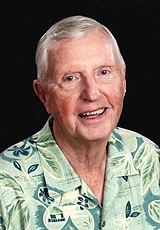
It was nearly a decade ago that my mentor Wally Norling and his wife Betty came to Bishop to be part of my installation at Bishop Creek Community Church, so I was very happy to be at his funeral as we celebrated his installation into eternity with his Lord Jesus Christ.
Our family had a long history with Wally, but I was reintroduced to him when I just happened into his class after serving communion one day. They had donuts, Wally was teaching. I thought I’d stay. I am glad I did. I loved the way he opened up God’s Word. His teaching always had substance. He was always concerned about the “flow of the logic of the grammar of the text.” It was always about God’s Word, not about Wally’s opinion. I continued to come to the class. After a few Sundays, I chased him down and asked, “This stuff is great. Why isn’t this on tape?” As always, he was less than impressed with himself, and merely shrugged his shoulders.
After a while, I asked Wally if he would be willing to meet with me, to be my mentor. I found out later that this was not all that unique of an idea as he had met with perhaps, hundreds of individuals and couples. After checking his schedule, he agreed to meet with me.
I wonder looking back how many strays had followed him home? How many strays like me Wally had brought through the door? How many times had he looked at Betty as if to say, “Another one followed me home; can we keep him?” But Wally had a way with strays like me. Betty was always gracious providing cookies, or brownies, or milk, or conversation.
We met for several years. I was not a pedigree specimen by any stretch of the imagination. I am sure I was a great challenge to him, but, in spite of that, we had a good time. Wally had a very simple way about him, but he definitely had a way of getting his teaching across. He saw something in me I hadn’t acknowledged was there. I certainly am in ministry today because God moved through the hands of this servant of Christ; I thank God for Wally.
Ephesians 3:11-12 says,
“And He gave some as apostles, and some as prophets, and some as evangelists, and some as pastors and teachers, for the equipping of the saints for the work of service, to the building up of the body of Christ.”
As I looked at the number of individuals at Wally’s memorial, it was clear to see that, for Wally, it was all about growing the Kingdom, building up the Church in maturity by the authority of God’s Word, and building up in numbers. He used his gift well.
Wally Norling spread a very broad mantle during his ministry. Serving as pastor, superintendent of the Southwest District, church planter, interim pastor, and mentor he cast a very long shadow upon the EFCA. I am privileged to have been under that mantle. But today I have surrendered my friend to his new home in the loving care of his Savior; he has finished well. And, as Wally would have wanted it, I give all the glory to his Lord Jesus Christ.
Wally lived by three guidelines: 1) Remember, you have nothing to prove. 2) Be transparent. 3) Be secure. You have nothing to prove; you belong to God, you have already won the prize. Be transparent, be real to those around you, God accepts you, so should they. Let God shine through you. Be secure – your portion, your inheritance is in God, not in what others think of you, or what you have done in your life.
All good words to consider.
Never downplay the affect you can have on others by using your God-given gift!
Here is another tribute to Wally from Brad Brison, another EFCA Pastor.
 The EFCA Leader's Network